
Charlie: a bohemian pushes you through the state of ‘vagueness’

image

The new released Malayalam movie ‘Charlie’ directed by Martin Prakkat receives a wide appreciation and huge applause for its framework, which gently fits into the new-Gen ‘spectator-cloud’ rising now and forever. In a way certain popular films are abided with age or ‘influential years’ are underlining the point where “The search for parallel/unconventional life has no longer effective rather, appears withheld concerned to Malayali youth from the very celebrated tolerance of ‘political anarchy’ during 70’s and 80’s.”
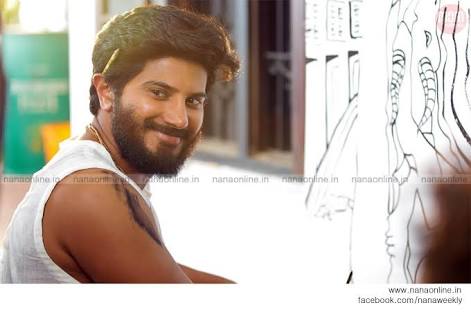
Let’s focus only the film now, the way of storytelling wasn’t dull, instead poetic; frames are glossy; costumes are lusty and narrative is well swayed despite any bothering about class and gender values. The fragrance of being ‘humane’ has effectively transferred from one to another. The leading protagonist named ‘Charlie’ (Dulquer Salman) played the role of a Bohemian, who leads an unconventional social life. No matter or what, the movie is keeping your ‘ass’ warm in an order to explore new and vibrant things in life; Which makes life more meaningful (in their definition).
But I observe, the movie silently or unknowingly admits its own inability to illustrate the “state of ‘anti-establishment’ can always dig a path to make one’s life political other than ‘petty’.”

image

The reason which I am bringing the argument here is “more often the visual sequences in the movie showcased the tendency to ‘look into the past’ (life) of characters and instances from the perspective of a humble present (signifies the ‘state of joy’). In real-time (outside the silver screen), this fancy way of approaching things might overhaul the positive actions/re-actions towards any occurring of tensions in the ‘present’ rather keep it aside and look right over from a more comfortable upcoming occasion; in other words it transforms you reluctant either apolitical.
Let’s take some example to amplify the statement above.
Sequence 1:
The female protagonist named ‘Tessa‘ (Parvathy) strives her search about the person (Charlie) who lived in the (old) apartment house before her arrival. If you can re-collect the visual sequence of the scene; she starts exploring about him with utmost excitement and curiosity after browsing a graphic story written by him. The story discharged immense suspense regarding one of his past incidents.
Continues ‘tight’ shots of a graphical image ‘thief’ (indicates: looking into the dark and pointing out something valuable); empty portions behind the pages of graphic story (signifies: two sides are demanding to speak, but there is only one visible so far); the emotions of the reader (means: ultimate curiosity generated in viewers); background score (BGM) sharp ‘cuts’ is also leading the narrative in a more effective manner.
We can have a same sort of visual reading in every case, but wishing to opt out!
Sequence 2:
The graphic story ends while the leading protagonist and supporting character looking into a house over the roof, where the camera was also entered inside from ‘top’ (means: looking into something more curiously and the object found bit inferior).
Later the story also takes to the past life of a person whom they found inside.
Sequence 3:
The leading character in the movie celebrated his birthday by publishing own ‘obituary’ in the newspaper apparently declares his inner thirst to deliberately authorize his attachment towards the people he mingles with. He discovers everybody loves him a lot.
The repeating habit of ‘selfie’ substantiates it (even at the end of the movie, it shows the potency in holistic).
Sequence 4:
The character ‘Tessa’ later re-discovers/recollecting/identifying the actions took place in a lodge, where her meeting with ‘Charlie’ went unsuccessful.
Sequence 5:
The women, who was pulling a tragic life with HIV infection gets an opportunity celebrates her birthday with ‘Charlie’ in a boat at late midnight with the happiness of the moment. Her life story (disastrous) was later told by ‘Charlie’ to another supporting actor.
Sequence 6:
Kunjappan, the role handled by ‘Nedumudu Venu’ was running an old age home, where ‘Charlie’ used to be an occasional visitor. The character was so depressed due to his loss of love in teenage, those past stories gleams when he meets his old girlfriend in the old age. Obviously the instance was made by the character ‘Charlie’.
Now, I want the people to argue that “There are movies made with much flashback narrative (or looking into the past, at least visiting or revisiting the past), and it has been political at its best way.” The classics such as ‘Citizen Kane’, ‘Rashamon’ and ‘Psycho’ were made with such manner of ‘storytelling’. Now, those films taking its pursuit into the past are with the intense pressure of conflict created by the present.

In Rashamon, the same incident was discussed and narrated by men in multiple angles. In the real sense also the filmmaker Kurosova takes us into the ‘confusing circumstance’ where decision of withdrawal from the World War was made by Japan authorities after sequences of atom bomb blasts in the country.

In Citizen Kane, the last word Kane uttered before his death ‘rosebud’ creates tension in the present and director ‘Orson Wells’ leading the spectator into the past life of Kane.
In Psycho, the viewer faces a serious challenge to find reasons for the actions of ‘elder woman’ as well as a serious doubt created by ‘Norman Bates’ with his behavior. This intersects the conflict pressure of real-time with the past incidents.
Aren’t we learned the fact that the sense of ‘politics or rebellion’ will happen to meet an individual only his/her conditions faces challenge as well as conflict with present or the immense pressure given by the past life?
In that context the movie ‘Charlie’ forcing us to be uninvolved and reluctant throughout its narrative till the end, where all of us are forced to walk out of the screening room by thinking ‘Charlie’ is there to look after every known tensions. Our role is just to draw ‘applause’ for him.
Now, what if the movie winds up with a permanent absence of the leading character?
Okay, it’s a time for not to involve much in the artistic freedom.
The movie ‘Charlie’ keeping you as a leech in the seat of the darkroom and asked you to walkout as an irresponsible, disoriented, reluctant and apolitical consumer of the mainstream cinema. But I certainly appreciate the selection of ‘Cultural gathering’ at the very end, where everything was pointed out specific later dragged into the crowd and acted uniformly for the moment.

Holy or unholy, whatever you take it!
image

PS: Appreciate the overall effort and crew members.

– Murali Margassery

Man-nature conflict, with an additional warning

Diversification as well as insertion of social values into themes, furnishes the classy outlook to all released assignments of MT Vasudevan Nair – Hariharan team in Malayalam film industry. Their films always obtain immense attention among the viewers and co-film makers even the neighbor film circles since the ‘Golder-era’ of Malayalam cinema (1980 – 90). Panjagni, Oru Vadakkan Veeragatha, Parinayam, Amritam Gamaya are some of their notable outcomes.
Pazhassiraja was the one movie got fair attention from the viewers but less feedback from the ‘box office’ (according to the industry dialogue).
Let’s talk about their recent work, EZHAMATHE VARAVU releaEzhamathe-Varavu-Movie-wallpapers-02sed few days back; Just after few hours of watching the movie, I wish to state “The movie tells about the man-nature conflict and it warns at the end, the reaction of nature may become a beating over the territory, which keeps the things down inside the soil forever.”
Movie begins with the ‘top-angle static shot’ of a water pond and it trembles by the entry of an unknown. The unknown will be recognized by now by its roaring. Here the camera moves unbalanced into the deep rain-forest and it ends by a ‘circle pan’ shot. Now the viewer would get the clear idea about the geographical location of the story. The movie ends with a ‘circle pan’ shot and there is a message OR meaning OR advice is being given by the story teller as well as film maker.
Story line: Dr. Prasad (Vineeth), an archeologist arrives to Waynad woods to dig and unearth the available deposits of Chera Kingdom, which might relay under the soil since a thousand year. He meets Gopinath (Indrajith) a wealthy planter of the region and his wife (Bhanu). Nagu works as the guard of an estate bungalow and his daughter Mala jointly helps Dr. Prasad to gain the comfortable accommodation at bungalow owned by planter Gopinath.
    Dr. Prasad digs and finds new evidence to substantiate the existence of the Chera dynasty. He ensures somewhat pleasure at the lap of the forest and grip to its love of musical symphony. The inhabitants, their life, art and beliefs slightly enter into the lonely life of the young man. The story gets a new phase when a Nari (tiger) visits the settlement of inhabitants and seizes women in continues days. The conflict of the story begins here till the death of _______ (What? that I could not reveal right now here, because I want you to rush into the theatre to watch).
 bhavana-indrajith-and-vineeth-stills-15912

_____________________________________________

Man-nature conflict has been discussing through the movies, stories, drama and other form of arts but it never reduce the value or need of another talk. The tiger had been a symbol of a rigid reaction of nature against of human or his acts. How the fear accumulates to the eyes of human after facing cruelty is excellently drafted in the scenes of the movie. In the movie, the tiger targets only women, what it means to us. “Women is the idol of reproductive system,” Right? In India, we tie all the reproductive matter/objects/stuffs into the women name. Here we could really fetch the essence of values combined with the movie.
The ‘Adivasis’ of the forest believes that the tiger is the ghost of an old man and it stops hunting the women only at the number ‘7’. The hunting of women by the wild continued every day in various instances. One may happen at mid night, the next would be at twilight. The hunting reaches to ‘6’ people keeps away from the forest due to fear of life, but some of them seriously waiting for the tiger’s 7th arrival (EZHAMATHE VARAVU). Who are they? (Now you can’t move away without watching the climax).
This movie was adopted from an unreleased movie ‘EVIDEYO ORU SHTHRU’ by the same creators, but did not release that day by un-luck. Since it is an old story, everybody think there might be a romance. Yes, it is there, but I wontedly skip it from writing for no reason.
In my personal opinion it is a wonderful movie, must be watched by everyone.
Regards,
Murali Margassery

Amen: Magical Realism stands in opposition to the Syrian Christian orthodox social arrangement

Image
The movie ‘Amen’ must be considered as a brilliant attempt of the Director Lijo Jose Pellisseri, Script writer PS Rafeeque and Producer Fareed Khan, and I felt those people had the genuine caliber to approach cinema very seriously. Recently the movie ‘Life of Pi’ come up with the concept of Magical Realism, it gave focus to ‘Belief system, love, human-nature relationship, etc.’, but the movie ‘Amen’ discussed about social fragmentations and hardcore reality. The podium of the movie is the church controlled Syrian Christian village and it’s innocent people. The autocratic church set-up believes that every people of the village should continue their life under the shadow of church driven orthodoxy. Moreover the Village Kumaramkari’s and its forefathers took ‘band music’ as its soul for a long time and ‘Gee Vargese Band’ team is being sponsored by the church in recent years. But the constant failure of band team in various competitions Made struggle for the people who live with it. One more struggle happens in parallel, outside the boundary of the band team. The clarinet player Solomon (-Fahad Faazil Presented the character- Son of the renowned clarinet player esthappan, who is no more) finds difficulties to get along with his graced talent of clarinet playing. He is chucked out of the church band, because he unable to play the clarinet before the public except his lover Sosanna (Swathi Reddy). These parallel struggle moves till the end in a common pace and both overcome the problems in the end as well.
 “Social system needs to be developed from the scratch that is something what educated through the movie. In Indian socio-cultural system, the religion and cast never become old but their thoughts will definitely. The democratic freedom will never be agreed inside the structure. The two well-known religious practices such as Christianity and Islamism has its own richness with its social commitment, at the same time Huge amount of conservatives is stuck on it. Those who believe the Hinduism is a religion, who is also conservatives. Within this fragmented social setup, making a movie like ‘Amen’ is real courage.”
The movie begins with a historic mysterious storytelling about the popular devoted legend Saint Geevarghese Kumaramkari, who made an appearance before Tipu Sultan, when he and his military trying to control the church during Tipu’s monarchial ruling.
Let’s break The move into few pieces and continues the analysis:
ü  Kumaramkari’s Church
ü  Fr. Francis Vattoli
ü  Love and Innocence of the people
All these three pieces are different parts of the story and they are Interconnected in terms of Music – What I meant is Band Music. We detailed the political set up of the Kumaramkari church, but it is really valuable in the minds of the poor people. They need a place to get together; and we could see the pain and the crying of the people when the Priest Fr. Ottaplacken (Joy Mathew) decided to demolish and re-build the church. In some particular part of the Movie the whole society has needed someone to support and protect the social harmony. ‘Innocent people pray god in the struggle period’ – A young priest named Fr. Francis Vattoli (Indrajith) entered into the story – His thoughts, Perception of life, vision of society, and even understanding of the bible is entirely different from others but his heart driven by the peace and love. Fr. Vattoli never found difficulty to reach into the hearts of the common man of the village. He gets close to Solomon initially and to the French woman Michelle (Natasha Sahgal) also. Fr. Vattoli presented himself as a young gentleman and danced with Michelle at boat in their first meeting. After few meetings Fr. Vattoli become a splendid icon to Michelle, she might grow her love above the priest – seems a conventional attempt of the film-maker. Fr. Vattoli maintained a friendly relation with Michelle and he left to be a rebel into the diseased social system. (More part of the story reaches you when you watch the movie)
In the climax the Solomon led the Gee Vargese Band team and offers a magnificent success to the team from the constant failure strategy. Now the new priest Fr. Francis Vattoli will send to the Kumaramkari church to take the charge and he appears in the scene, kind of mind transitions also happens in a few people in the rural community.
Finally you will be asked by yourself, “Is the total village is a magical world? Who was the priest who appeared already?”
This Musical film has definitely generated an amazing mood for the viewers; the cinematographer Abinandhan Ramanujam’s work is real admirable. Frames (especially Sosanna’s room window) and many Camera movements violated all the conventional rules and did a lot of experiment to accumulate the real beauty in every sequence. The motion pace of the shots are also seems experimental – slow moves, jerked frames, zig-zag zoom outs – all supported well for the totality.My favorite scene in the Movie: Fr. Francis Vattoli helps Solomon and Sosanna to escape from the village on the of a church fest. Both were performing the cultural tablos in the occasion, and they try to escape from these by switching lights off. Solomon was in the costume of Jesus Christ. Unfortunately both of them caught by the relatives and Solomon beaten very badly. That scene draws symbolic into my mind and it seems how Christ badly treated before crucifixion. The shots and music provided an extra-ordinary feel in the right sequence

All must watch it and add comments here.

– Murali Margassery muralimargassery@hotmail.com