
The new released Malayalam movie ‘Charlie’ directed by Martin Prakkat receives a wide appreciation and huge applause for its framework, which gently fits into the new-Gen ‘spectator-cloud’ rising now and forever. In a way certain popular films are abided with age or ‘influential years’ are underlining the point where “The search for parallel/unconventional life has no longer effective rather, appears withheld concerned to Malayali youth from the very celebrated tolerance of ‘political anarchy’ during 70’s and 80’s.”
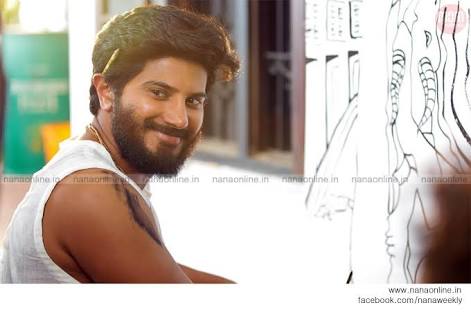
Let’s focus only the film now, the way of storytelling wasn’t dull, instead poetic; frames are glossy; costumes are lusty and narrative is well swayed despite any bothering about class and gender values. The fragrance of being ‘humane’ has effectively transferred from one to another. The leading protagonist named ‘Charlie’ (Dulquer Salman) played the role of a Bohemian, who leads an unconventional social life. No matter or what, the movie is keeping your ‘ass’ warm in an order to explore new and vibrant things in life; Which makes life more meaningful (in their definition).
But I observe, the movie silently or unknowingly admits its own inability to illustrate the “state of ‘anti-establishment’ can always dig a path to make one’s life political other than ‘petty’.”

The reason which I am bringing the argument here is “more often the visual sequences in the movie showcased the tendency to ‘look into the past’ (life) of characters and instances from the perspective of a humble present (signifies the ‘state of joy’). In real-time (outside the silver screen), this fancy way of approaching things might overhaul the positive actions/re-actions towards any occurring of tensions in the ‘present’ rather keep it aside and look right over from a more comfortable upcoming occasion; in other words it transforms you reluctant either apolitical.
Let’s take some example to amplify the statement above.
Sequence 1:
The female protagonist named ‘Tessa‘ (Parvathy) strives her search about the person (Charlie) who lived in the (old) apartment house before her arrival. If you can re-collect the visual sequence of the scene; she starts exploring about him with utmost excitement and curiosity after browsing a graphic story written by him. The story discharged immense suspense regarding one of his past incidents.
Continues ‘tight’ shots of a graphical image ‘thief’ (indicates: looking into the dark and pointing out something valuable); empty portions behind the pages of graphic story (signifies: two sides are demanding to speak, but there is only one visible so far); the emotions of the reader (means: ultimate curiosity generated in viewers); background score (BGM) sharp ‘cuts’ is also leading the narrative in a more effective manner.
We can have a same sort of visual reading in every case, but wishing to opt out!
Sequence 2:
The graphic story ends while the leading protagonist and supporting character looking into a house over the roof, where the camera was also entered inside from ‘top’ (means: looking into something more curiously and the object found bit inferior).
Later the story also takes to the past life of a person whom they found inside.
Sequence 3:
The leading character in the movie celebrated his birthday by publishing own ‘obituary’ in the newspaper apparently declares his inner thirst to deliberately authorize his attachment towards the people he mingles with. He discovers everybody loves him a lot.
The repeating habit of ‘selfie’ substantiates it (even at the end of the movie, it shows the potency in holistic).
Sequence 4:
The character ‘Tessa’ later re-discovers/recollecting/identifying the actions took place in a lodge, where her meeting with ‘Charlie’ went unsuccessful.
Sequence 5:
The women, who was pulling a tragic life with HIV infection gets an opportunity celebrates her birthday with ‘Charlie’ in a boat at late midnight with the happiness of the moment. Her life story (disastrous) was later told by ‘Charlie’ to another supporting actor.
Sequence 6:
Kunjappan, the role handled by ‘Nedumudu Venu’ was running an old age home, where ‘Charlie’ used to be an occasional visitor. The character was so depressed due to his loss of love in teenage, those past stories gleams when he meets his old girlfriend in the old age. Obviously the instance was made by the character ‘Charlie’.
Now, I want the people to argue that “There are movies made with much flashback narrative (or looking into the past, at least visiting or revisiting the past), and it has been political at its best way.” The classics such as ‘Citizen Kane’, ‘Rashamon’ and ‘Psycho’ were made with such manner of ‘storytelling’. Now, those films taking its pursuit into the past are with the intense pressure of conflict created by the present.
In Rashamon, the same incident was discussed and narrated by men in multiple angles. In the real sense also the filmmaker Kurosova takes us into the ‘confusing circumstance’ where decision of withdrawal from the World War was made by Japan authorities after sequences of atom bomb blasts in the country.
In Citizen Kane, the last word Kane uttered before his death ‘rosebud’ creates tension in the present and director ‘Orson Wells’ leading the spectator into the past life of Kane.
In Psycho, the viewer faces a serious challenge to find reasons for the actions of ‘elder woman’ as well as a serious doubt created by ‘Norman Bates’ with his behavior. This intersects the conflict pressure of real-time with the past incidents.
Aren’t we learned the fact that the sense of ‘politics or rebellion’ will happen to meet an individual only his/her conditions faces challenge as well as conflict with present or the immense pressure given by the past life?
In that context the movie ‘Charlie’ forcing us to be uninvolved and reluctant throughout its narrative till the end, where all of us are forced to walk out of the screening room by thinking ‘Charlie’ is there to look after every known tensions. Our role is just to draw ‘applause’ for him.
Now, what if the movie winds up with a permanent absence of the leading character?
Okay, it’s a time for not to involve much in the artistic freedom.
The movie ‘Charlie’ keeping you as a leech in the seat of the darkroom and asked you to walkout as an irresponsible, disoriented, reluctant and apolitical consumer of the mainstream cinema. But I certainly appreciate the selection of ‘Cultural gathering’ at the very end, where everything was pointed out specific later dragged into the crowd and acted uniformly for the moment.
Holy or unholy, whatever you take it!
PS: Appreciate the overall effort and crew members.
– Murali Margassery